Find a credible route to someone who matters
Ask who on your team already knows a permitting specialist, a utility engineer, or a county planner, and see the connections that lead there.
Find the right person, understand the history, and prepare your next move. Relatance connects your team's relationships and project context in a shared Orbit, so hard-won knowledge stays available as projects and people change.
Built for the people coordinating owners, utilities, jurisdictions, capital partners, and delivery teams across long project timelines.
MCP read + write live · Permissions live · Founding Partner program open
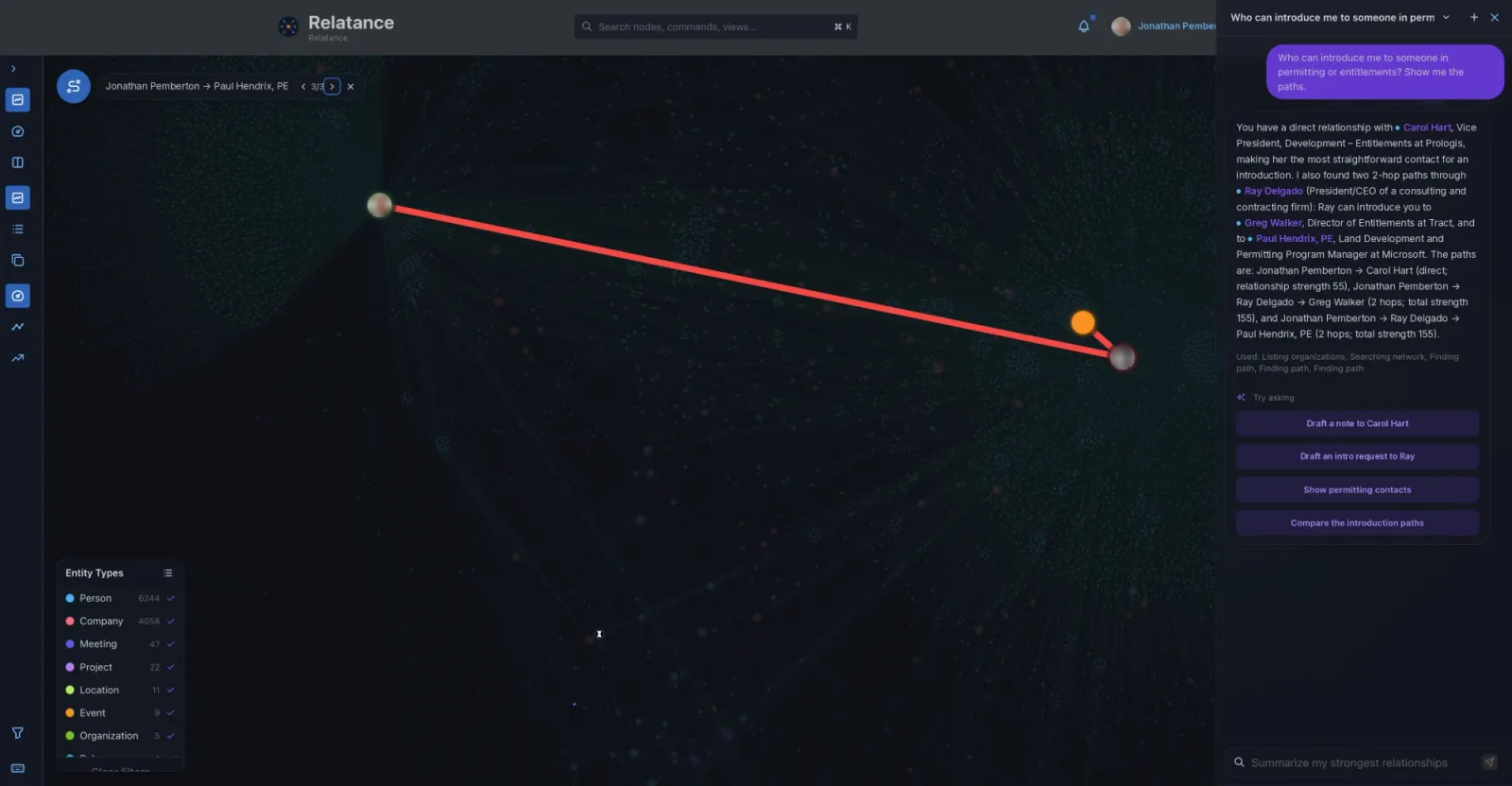
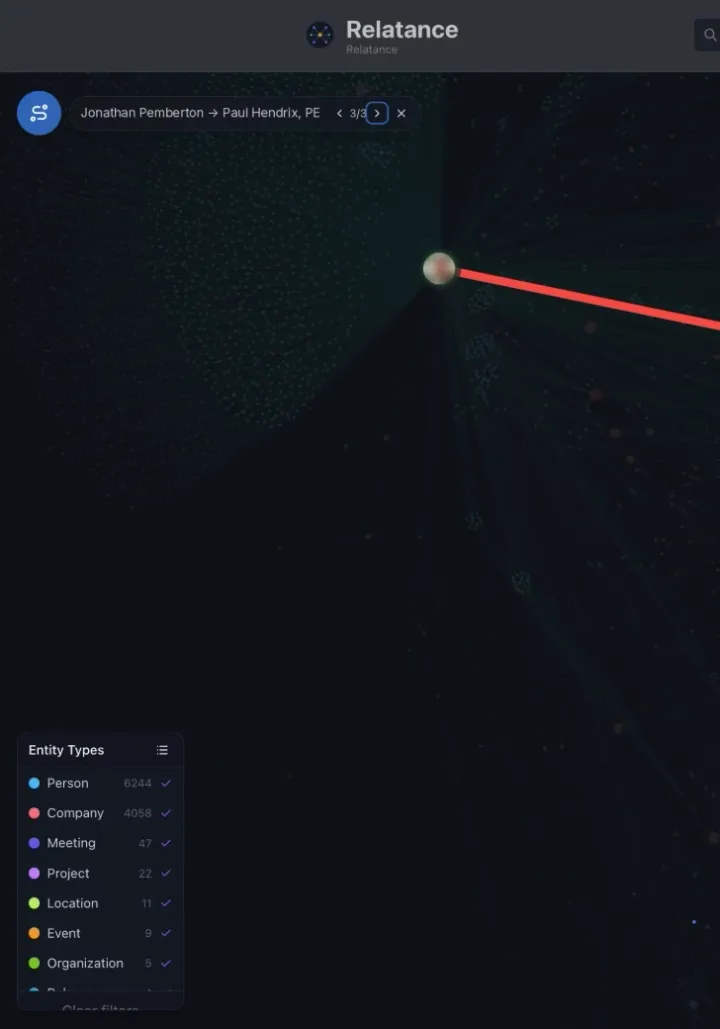
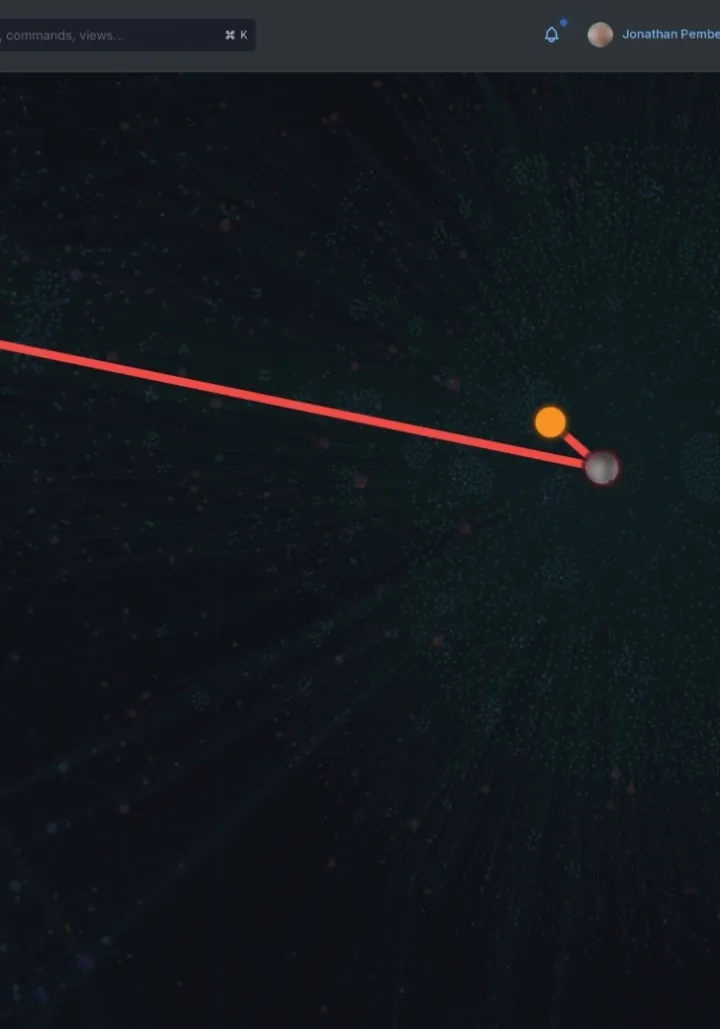
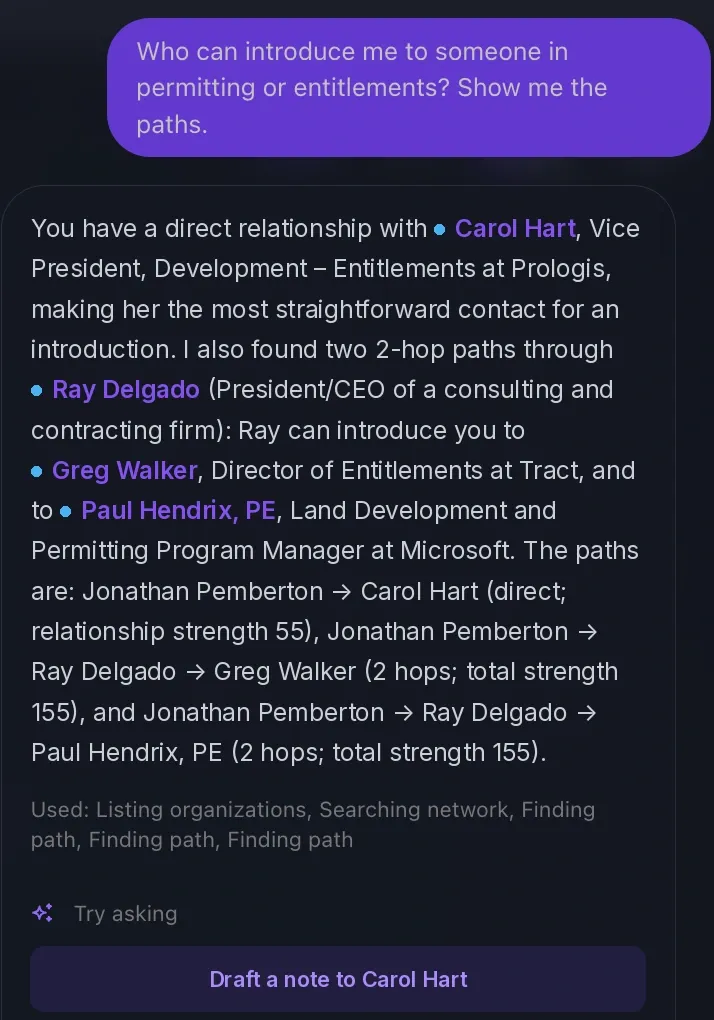
Ask who on your team already knows a permitting specialist, a utility engineer, or a county planner, and see the connections that lead there.
Before a utility meeting, see who's in the room, what was said last time, and what was promised, with sources attached wherever they were captured.
When a new project lead comes on, they inherit the relationships and history the last lead built.
Your most experienced people have spent years learning who matters and how work moves. Relatance helps that knowledge travel with the team.
Land, power, utilities, jurisdictions, capital, design, procurement, construction, and operations have to line up. So do the people behind each of them.
The technical work gets documented. The relational work often lives in calls, introductions, text threads, and the judgment of a few experienced people.
Why this person matters, who made the introduction, what was promised. When that lives in one person's memory, a handoff starts with reconstruction.
Experienced operators know how to move through a stakeholder field. Their teams often can't see the same map, so warm routes go unused.
Long-cycle projects have windows. The right conversation with the wrong person at the wrong moment can cost months, and calendars don't show the relational shape of time.
Sava is for context. Orbit is for the network. Helix, emerging, is for time. Kosmos is how context gets in.
Sava · Context · Live
Ask in plain language. Using Sava or a supported AI assistant, you can bring up the relevant history, see why a connection matters, and find a route to someone, with answers that point back to where they came from.
Orbit · Network · Live
The people, organizations, projects, and relationships relevant to you, held in one shared field you can move through. Each relationship carries its history: how it formed, how strong it is, when it was last touched.
Helix · Time · Emerging
Last year below, the next 90 days approaching from up ahead, next year above, rendering long timelines legible. Today, Orbit already holds dated events and approaching commitments; Helix, the full temporal view, is emerging.
Kosmos · Intake · Live
Debrief after a site walk, paste in meeting notes, or speak a recap on the drive back. Kosmos turns it into people, relationships, and dated events in Orbit.
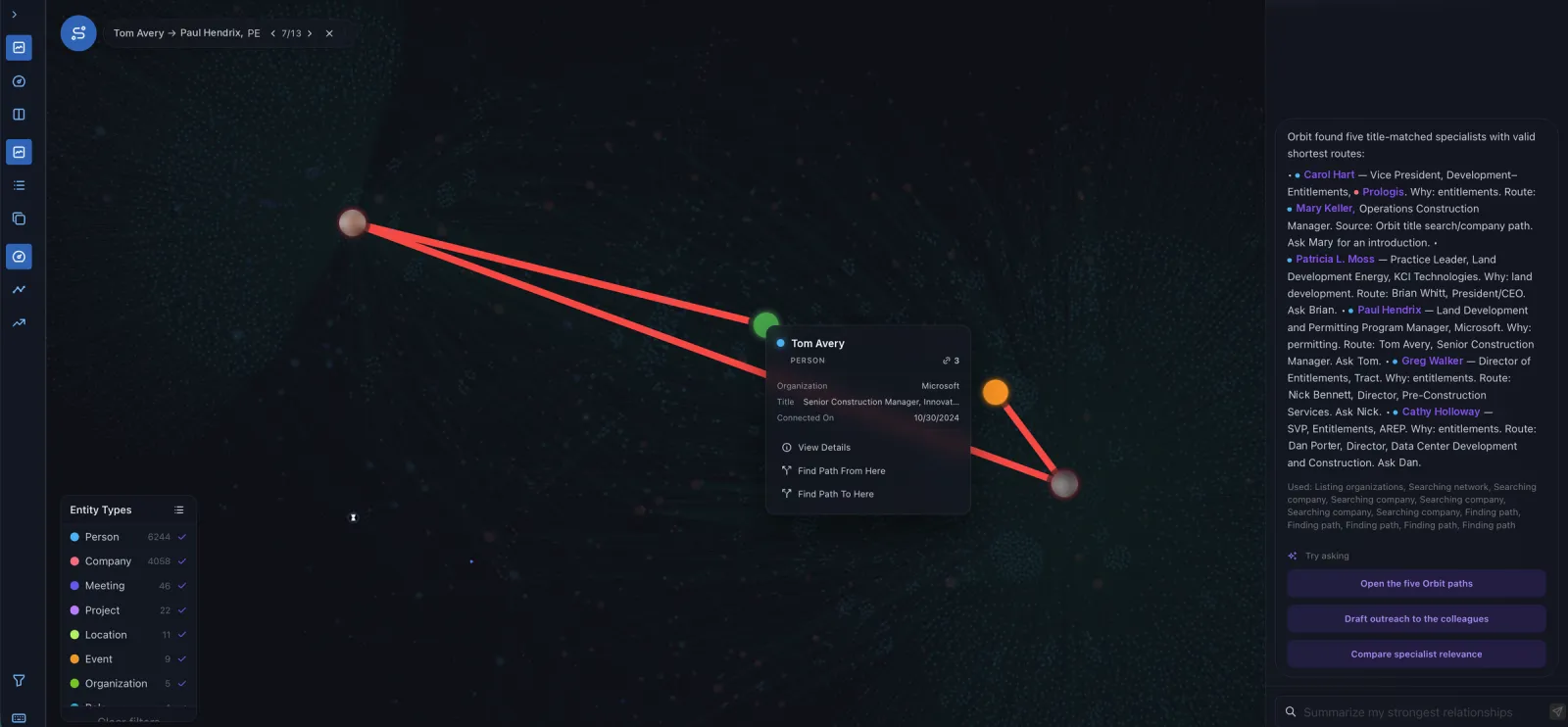
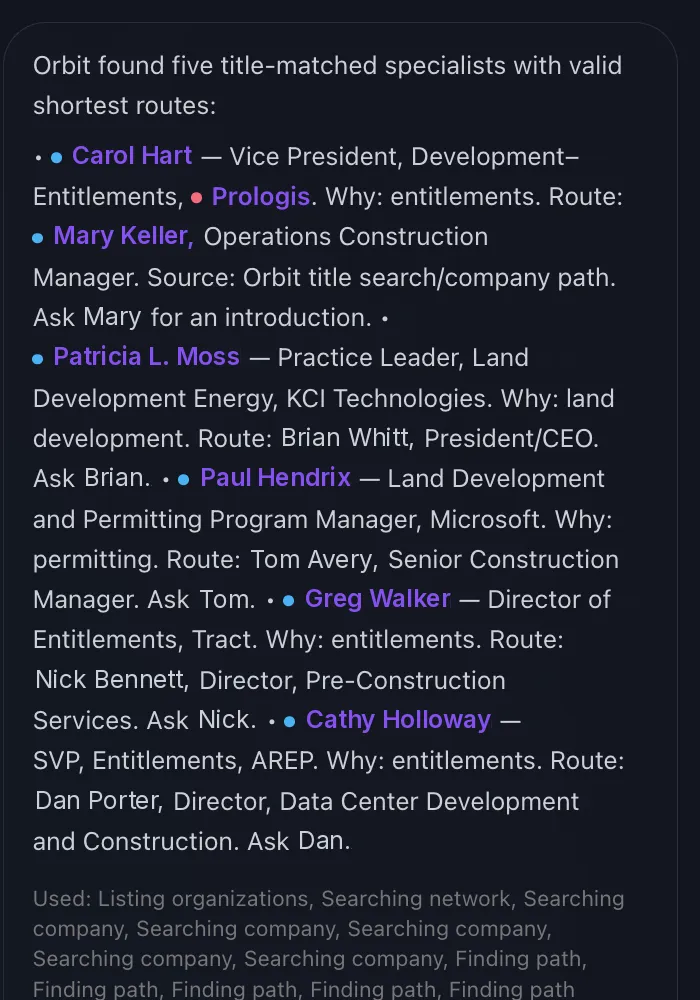
During a live evaluation, a team was asked by one of its own clients to recommend a permitting specialist. Nobody in the room could name one. They asked Claude, connected to their Orbit through Relatance: do we have anybody in our network who really knows permitting?
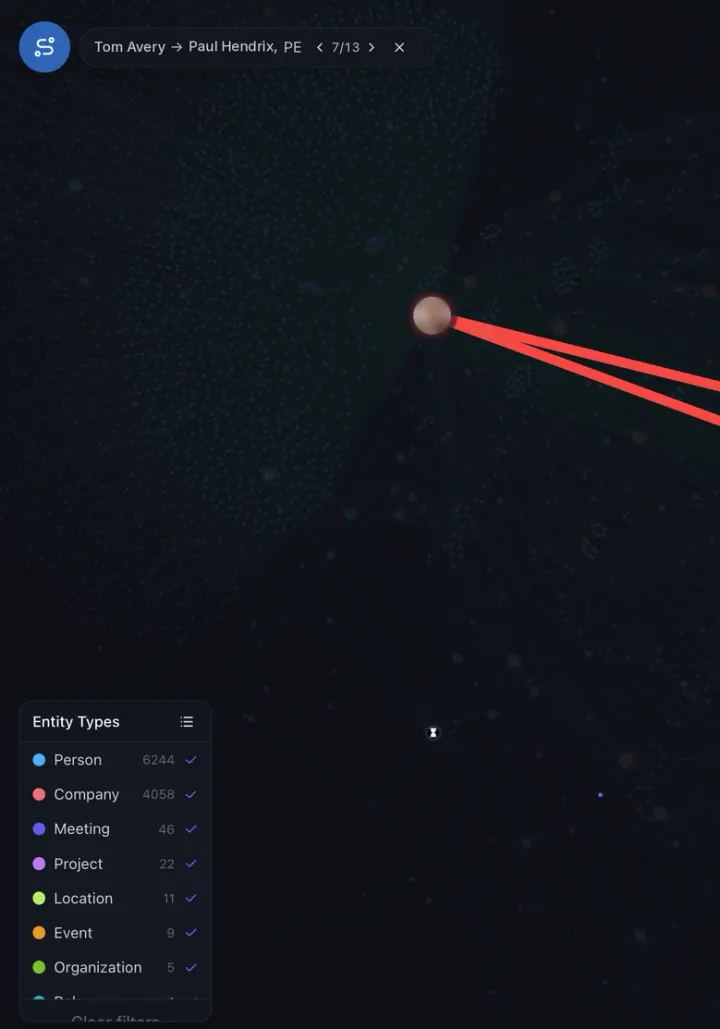
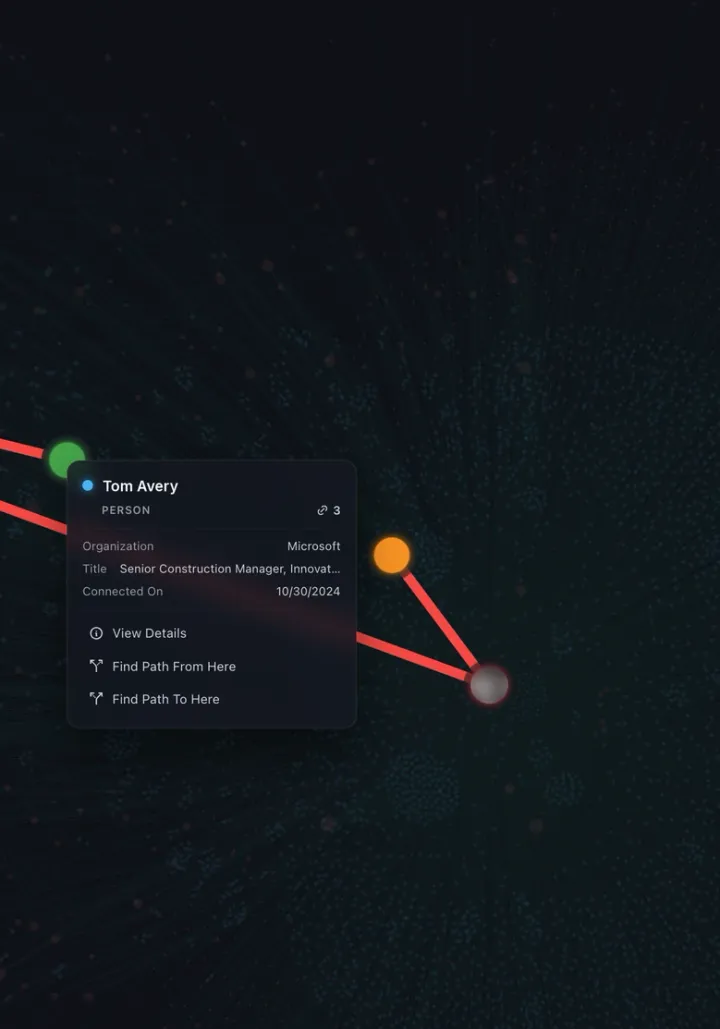
Asked again of Sava, which traces the routes on Orbit.
Development leads, project executives, owner's representatives, and the advisors who work beside them.
Relatance sits above the systems you already run and holds the relational context that scatters across them.
Judgment stays with your team. Relatance surfaces paths, history, and timing so the people doing the work can decide.
Read about enterprise fitNo. A CRM is good at fields, stages, and account activity.
Relatance holds the relational context around the work: history, influence, timing, and why a connection matters. Most teams run both.
One live project and the people who know it. We start with the relationships your team already has.
Claude, ChatGPT, Notion, and Grok are verified today, reading and writing Orbit through MCP. Other MCP clients may connect; we confirm compatibility with you first.
Orbit, Sava, Kosmos, MCP read and write, and permissions are live. Helix is emerging. Portal and people-data discovery are planned.
In 90 minutes, we map a slice of one real project into Orbit with you and use it to answer a question your team is actually asking.
Your network already holds years of hard-won context. Relatance makes it visible and durable, for the people doing the work and the assistants supporting them.